

The Fatigued Mind
What cognitive fatigue reveals about effort & the brain


When the mind begins to tire
Lately I have been feeling mentally tired. There has been a lot happening, and much of it requires sustained concentration: Writing, reading, completing forms, thinking through ideas, planning and so on.
After several hours, and sometimes several days, of this I can still continue working, but maintaining attention demands more effort and small distractions start to look unusually appealing.
In psychology we refer to this phenomenon as cognitive fatigue, which emerges after prolonged periods of mental effort. But despite how familiar the experience is, understanding what produces it has proved surprisingly difficult!
Why fatigue often goes unnoticed
One of the reasons cognitive fatigue remained difficult to study is that it does not always appear in obvious ways. When we feel mentally tired, we often assume that our performance will decline.
But research suggests this is not necessarily the case.
See, we can continue completing demanding tasks even when fatigue has already set in. Remember times when you felt mentally drained but still managed to finish what you were doing? Even when tired we remain capable of producing the correct answers, following instructions, and maintaining accuracy.
From the outside, nothing seems to have changed very much.
Self-reports are not always reliable either. It turns out we are not particularly good at judging the level of fatigue we are experiencing while we are in the middle of sustained mental work. The feeling may only become clear once the effort stops.
For this reason, researchers have struggled to identify clear markers of cognitive fatigue. So, if performance remains stable and subjective reports are inconsistent, detecting when fatigue has truly emerged becomes far more complicated.
The cost of cognitive control
Given that fatigue does not reliably appear in performance, where should we look for it?
Recent research points to the effort required to maintain cognitive control [1]. Cognitive control refers to the mental processes that allow us to focus attention, resist distractions, follow rules, and guide behaviour toward a goal.
Much of the work I described earlier depends on these processes. Writing, analysing information, planning, and working through ideas all rely on sustained cognitive control.
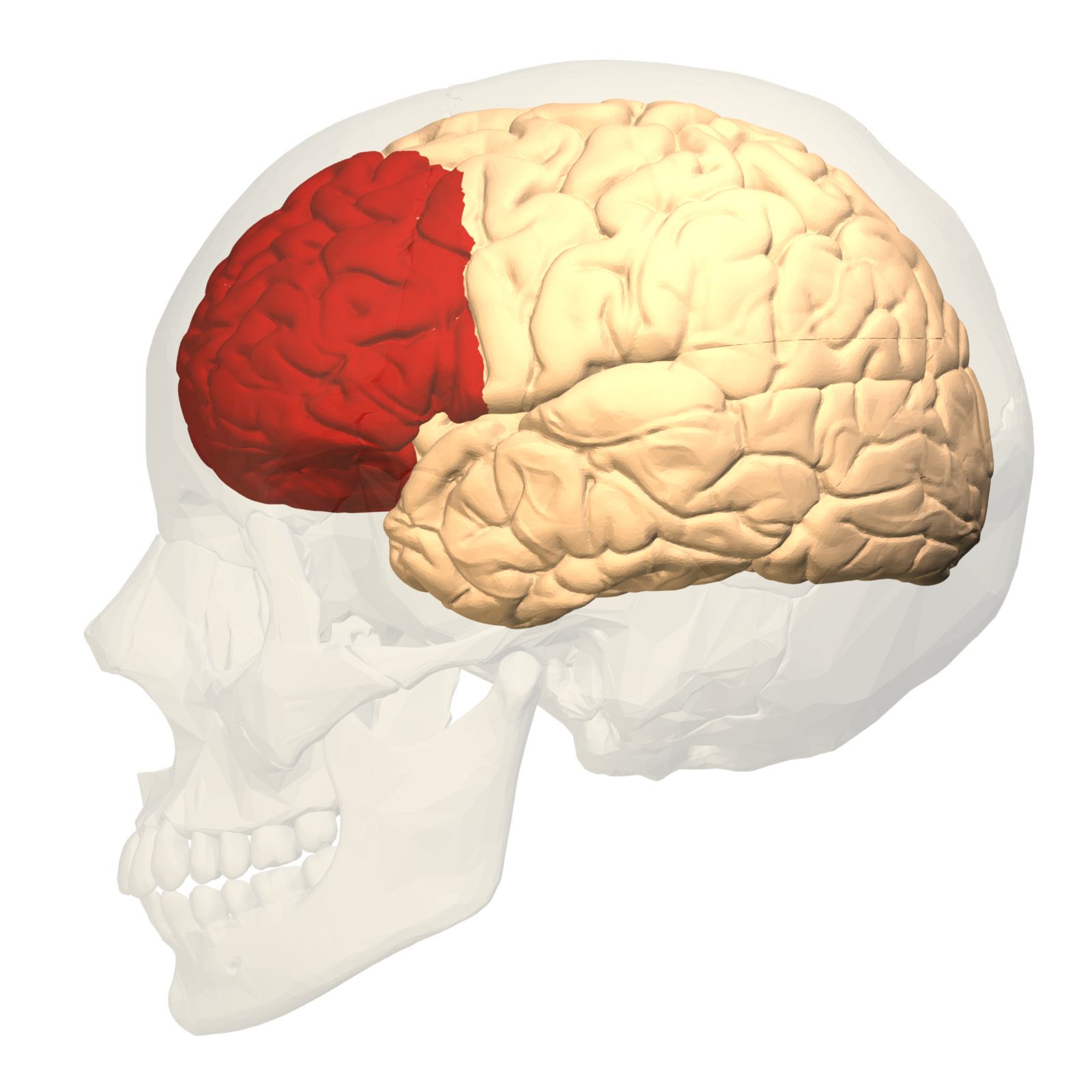
In a recent review, Mathias Pessiglione and colleagues propose that fatigue may emerge as the biological cost of repeatedly engaging these systems [1]. The brain regions responsible for cognitive control, particularly in the prefrontal cortex, must remain active for long periods during demanding mental work.
Over time, the intense activity in these regions may lead to small metabolic changes (the chemical balance in those brain areas begins to alter). As this happens, maintaining controlled thinking requires more effort from the brain.
When the brain starts choosing the easier path
Cognitive fatigue does not only affect how effortful thinking feels.
It also influences the choices we make.
In their review, Mathias Pessiglione and colleagues point out that fatigue often becomes visible in economic decisions [1]. Meaning, after long periods of demanding mental work, people tend to favour options that require less effort and offer quicker rewards.
This is when I might, for example, decide to check emails instead of continuing with a demanding piece of work!
Note that this does not mean that our abilities suddenly disappear. We remain capable of performing the task. What changes is our willingness to continue investing effort.
From the brain’s perspective, this pattern is understandable.
If sustained cognitive control becomes increasingly costly, actions that require less control become more attractive. Routine behaviours, simple tasks, and immediate gratifications begin to compete more strongly for our attention.
This dynamic also helps explain why maintaining self-control becomes more difficult when we are mentally fatigued, a topic I explored in a previous article.
Seen in this way, cognitive fatigue is not simply a feeling of tiredness. It is part of a regulatory process that guides how we allocate effort over time.
Conclusion
I now see the fatigue I’ve been experiencing lately a little differently.
What I interpreted as a lack of mental energy seems to simply reflect the limits of cognitive control. Sustained thinking asks a great deal from the brain, and over time the cost of maintaining that effort increases.
Understanding this does not solve the problem, but it does change how I interpret those moments when concentration becomes harder to sustain. They may just be my brain reminding me that effort, like any other resource, cannot be spent indefinitely.

Reference List:
[1] Pessiglione, M., Blain, B., & Naik, S. (2025). Origins and consequences of cognitive fatigue. Trends in Cognitive Sciences, 29(3), 189–203. https://doi.org/10.1016/j.tics.2025.01.003
Sorry you’re going through a tough time! Take care of yourself and let your mind get pulled away to something more relaxing now and then. ❤️
Cognitive fatigue is something we all experience, but you’ve managed to articulate it with a clarity that most of us struggle to reach when we’re in the thick of it. You’re absolutely right: our outward performance can remain steady even as the internal cost rises sharply, and that mismatch can be profoundly draining.
What you’re describing is entirely consistent with what we see when high‑demand tasks pile up without enough recovery time. Even with our understanding of the underlying mechanisms, none of us are immune to the effects.
I hope you’re able to carve out some real moments of rest whatever form that takes for you. Those pauses aren’t indulgent; they’re essential for preserving long‑term cognitive capacity. And given the intensity of the work you’ve been carrying, it makes perfect sense that your mind is signalling the need for some breathing room.
Be gentle with yourself. We remind our patients of this all the time, but it applies just as much to us.